Prompt Versioning and Experiment Tracking
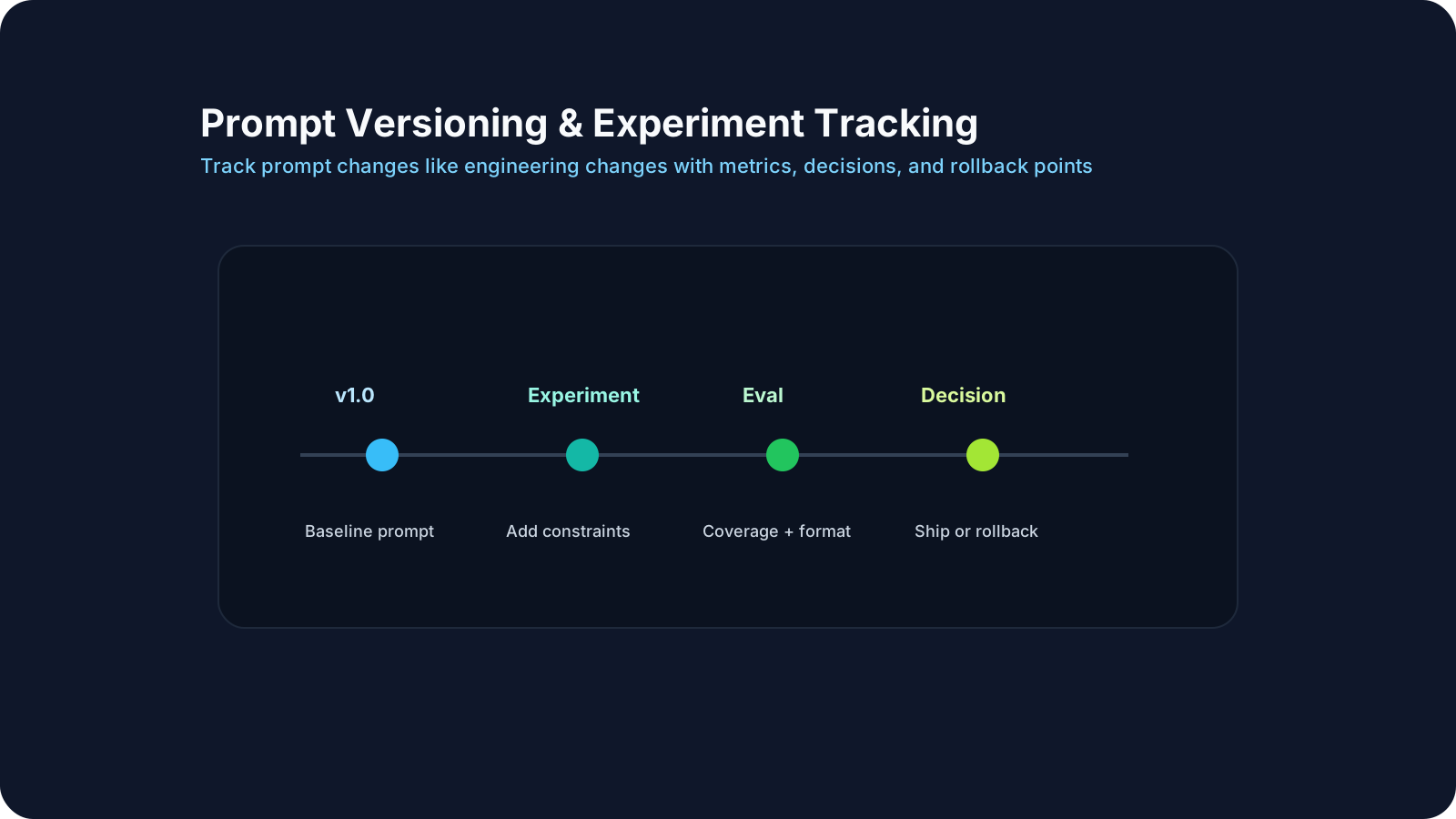
Manage prompt evolution with version control, experiment logs, metrics, and reproducible decision records.
Overview
Prompt changes are engineering changes. If a prompt, system instruction, output schema, or model version changes, behavior can change too. Without versioning and experiment logs, teams cannot explain quality drift, reproduce past behavior, or safely roll back when output quality drops.
This lesson shows how to treat prompts as governed assets with versions, experiment records, and release decisions.
A Practical Note for QA Learners
This lesson is not just process overhead. It is what prevents teams from asking, "Why did the assistant suddenly start missing lockout cases?" with no evidence trail.
Learning Goals
- Version prompts with meaningful metadata.
- Track experiment outcomes and risks clearly.
- Compare before-and-after prompt behavior with metrics.
- Define rollback triggers for prompt-driven workflows.
- Build a simple prompt change log your team can actually maintain.
Core Concepts
1. Why Prompt Versioning Matters
If prompt behavior changes, you need to know:
- what changed
- when it changed
- who changed it
- why it changed
- what metrics improved or regressed
Without that, prompt tuning becomes guesswork.
2. What to Version
At minimum, track:
- prompt text
- system or developer instruction text
- model version
- decoding settings
- eval set version
- output schema version
3. Experiment Log Fields
Useful experiment fields:
| Field | Purpose |
|---|---|
| Hypothesis | Why you think the change should help |
| Change summary | What changed |
| Dataset used | What was tested |
| Metrics before and after | Evidence of impact |
| Decision | Ship, revise, or roll back |
| Owner | Accountability |
4. Versioning Patterns
Simple versioning can work well:
v1.0v1.1v1.2-risk-coverage
What matters is consistency, not complexity.
5. Rollback Readiness
Define rollback triggers for:
- critical hallucination increase
- schema pass rate drop
- security regression
- severe coverage regression
If a prompt is production-significant, rollback should not depend on memory or guesswork.
QA/SDET Relevance
Manual QA benefits:
- easier comparison of old vs new prompt behavior
- clearer risk communication during release review
Automation and SDET benefits:
- experiment automation
- version-to-metric traceability
- faster rollback on regression
Practical Work
Exercise: Create a Prompt Change Log
Create a changelog template for one important prompt.
Include:
- version
- change reason
- expected improvement
- risks
- eval metrics
- release decision
Then run two controlled experiments and document both outcomes.
Reflection
- Which changes actually improved output?
- Which change created a hidden regression?
- What should force an immediate rollback?
Recommended Resources
Key Takeaways
- Versioning enables reproducibility and accountability.
- Experiment records improve team learning speed.
- Rollback readiness is essential for prompt-driven systems.
- Prompt changes should be evaluated like code changes.
- Stable records reduce repeated mistakes and silent regressions.
Next Step
Continue to Prompts for Test Case Generation to apply prompt design directly to a high-value QA workflow.